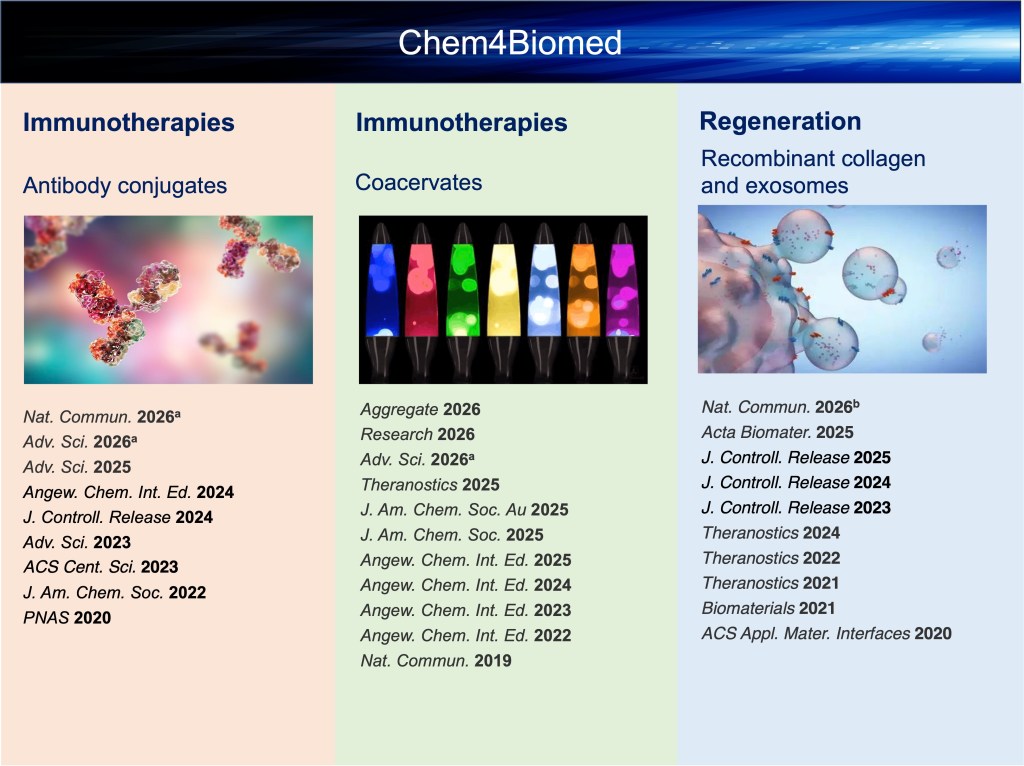
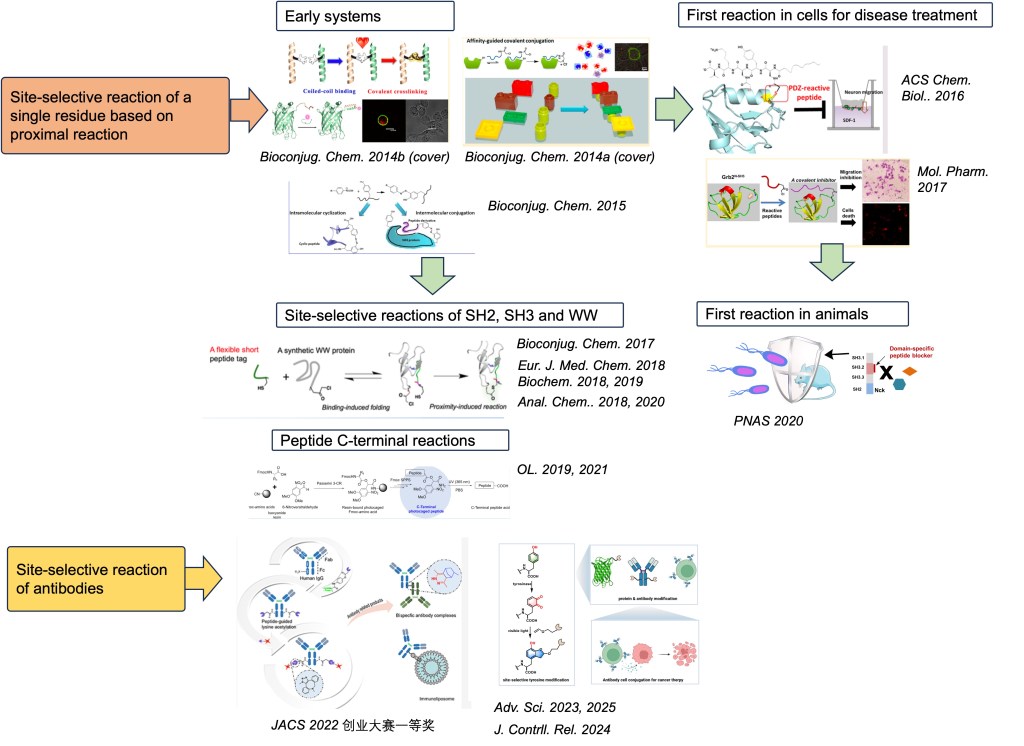
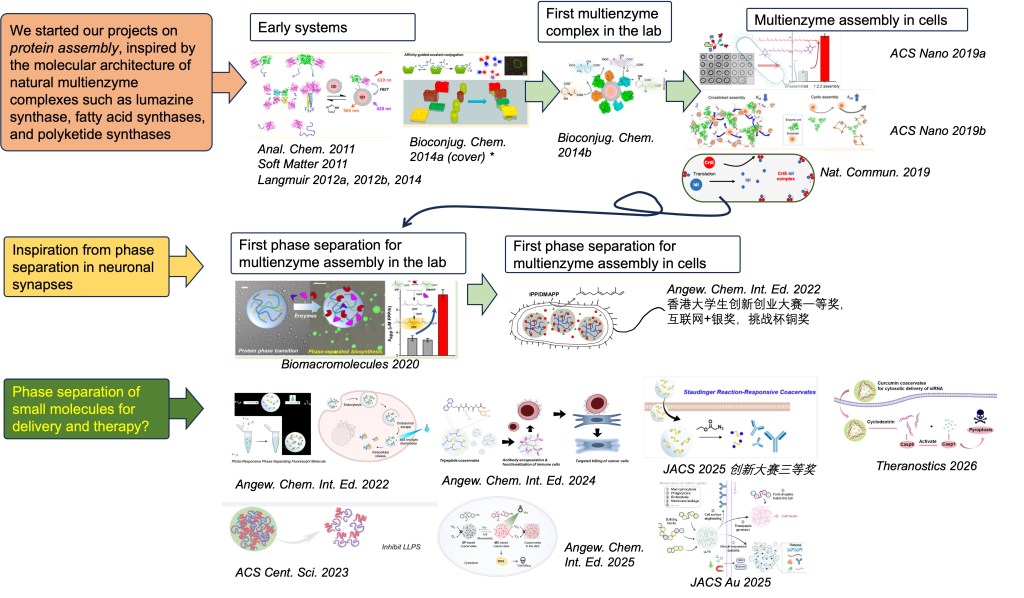
In recent years, spectacular developments have been witnessed in bioorthogonal reactions of biomacromolecules and their far-reaching influence on biomedical research, ultimately recognized by the awarding of the 2022 Nobel Prize in Chemistry. Based on bioorthogonal reactions and the principle of proximity-induced reactivity, our lab is dedicated to developing site-selective protein reactions – reactions that are precise to a single amino acid residue rather than one type of amino acid [1, 2]. Most recent discoveries include precise acetylation of Lys 248 of commercially available antibodies and precise functionalization of Tyr 296 of antibodies [3, 4]. The reactions yielded new strategies in immunotherapy. The second project in our lab is to develop phase-separating small molecules for intracellular delivery of proteins or nucleic acids. We have designed molecules that form phase-separated droplets and disintegrate upon photolysis, yielding a transfection agent that delivers protein into the cytoplasm [5, 6]. In the third project, we chemically or genetically modified the surface of exosomes to give outstanding targeting vehicles for drug delivery into the otherwise impenetrable cartilage and bring new treatments to osteoarthritis and osteoporosis [7-12]. The fourth project includes the development of biomaterials based on recombinant collagen for tissue engineering. Taken together, these projects underscore the use of chemical biology and synthetic biology principles in biomedicine.

Figure 1. Chem4Biomed in the Xia lab.